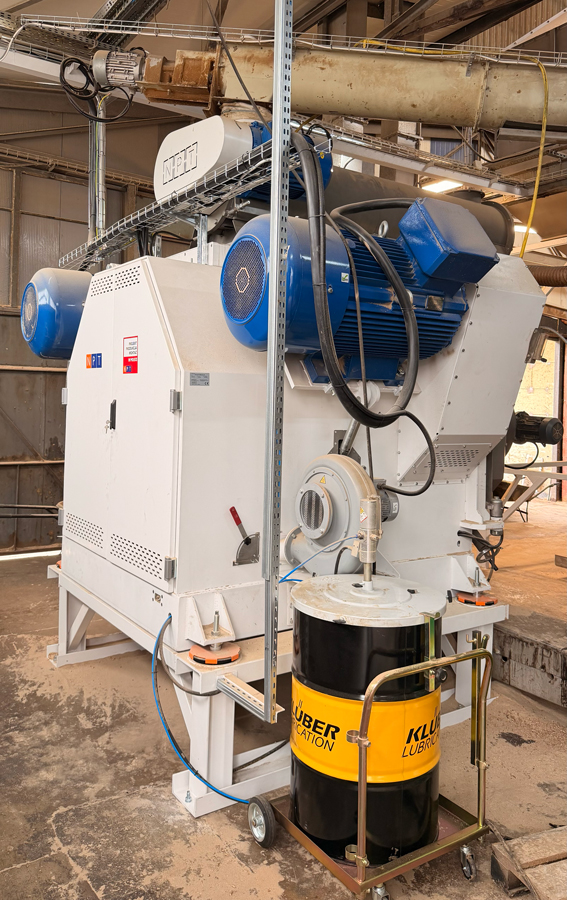
Forest biomass, agricultural biomass and RDF/SRF — check input moisture, die selection and process parameters for every feedstock the GRB2 880.264 processes.
The primary reference feedstock for GRB2 880.264. Forest chips, shavings and residues from the timber industry yield high pellet density and stable calorific value — the rated 66 kWh/t specific energy consumption is based on this feedstock.
Cereal straw, sunflower husk and other harvest residues are feedstocks with lower bulk density and higher ash content. The GRB2 880.264 pelletises straw once its moisture is brought into the range below, typically with a small addition of a natural binder (e.g. molasses, starch) for pellet stabilisation.
Refuse-Derived Fuel requires pre-shredding and removal of non-combustible fractions before feeding into the pelletising chamber. The GRB2 880.264 handles RDF with increased roller pressure and extended compaction time, compensating for feedstock heterogeneity.
Die hole diameter, roller speed and process temperature vary by feedstock — the table below gives indicative reference values for the GRB2 880.264.
| Parameter | Forest Biomass | Agro Waste | RDF |
|---|---|---|---|
| Die hole diameter | 6 mm | 6–10 mm | 8–12 mm |
| Roller speed | ~320 rpm | ~280 rpm | ~250 rpm |
| Process temperature | 80–90°C | 75–85°C | 85–95°C |
| Roller pressure | Standard | Standard | Increased |
A pellet producer from the Greater Poland region operated two older two-roller pellet mills with a combined energy consumption of approx. 98 kWh/t, running in multi-shift operation on forest biomass. After deploying one GRB2 880.264, the company expanded production on a single three-roller machine, reducing specific energy consumption per tonne of pellets by over 30% while simultaneously increasing the overall throughput of the plant.