Select language
PL DE RO BG FR IT ES HU
Technical Data

Technical Specifications of the GRB2 880.264 Industrial Pellet Mill

Motor parameters, die construction, lubrication system, automation and foundation requirements — the complete reference specification for the GRB2 880.264 pellet mill.

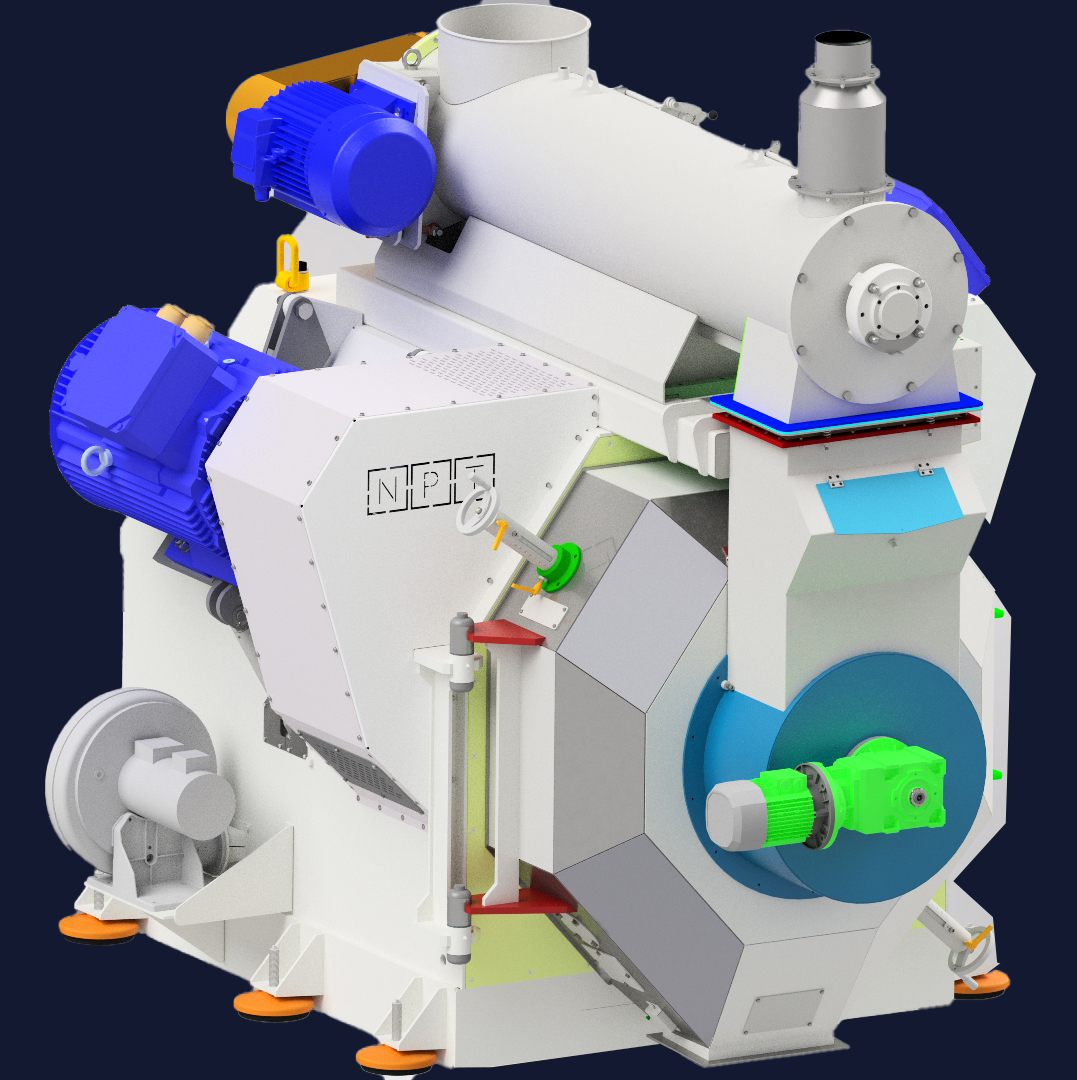
GRB2 880.264 — Nawrocki industrial pellet mill — GRB2 880.264 pellet mill for feeds and biomass, from Nawrocki, made in Poland
01

What motor does the GRB2 880.264 have? 264 kW at 66 kWh/t

ParameterValue
Installed main motor power2x132 kW IE4 740rpm
Reference output (forest biomass)4.0 t/h
Energy consumption (forest biomass)66 kWh/t
Main shaft peripheral speed~5.97 m/s
Conditioner motor power7.5 kW
WarrantyUp to 36 mo.

Output by Feedstock

Maximum throughput of the GRB2 880.264 depends on the inlet moisture content and bulk density of the feedstock. The table below gives reference values for the main material groups.

FeedstockInlet MoistureOutput
Forest biomass, wood chips10–14%4.0 t/h
Straw, sunflower husks12–16%3.2–3.6 t/h
RDF (refuse-derived fuel)15–20%2.6–3.0 t/h
02

What die and rollers does the GRB2 880.264 use? 880 mm, 3 rollers

ParameterValue
Die diameter880 mm
Number of press rollers3 rollers
Die materialStainless steel X46Cr13
Available hole diameters6 / 8 / 10 / 12 mm
Press roller materialAlloy steel, hardened surface
Roller pressure adjustmentManual
03

How do the lubrication and bearing cooling systems work?

ParameterValue
Main bearing lubrication typeCentralised, automatic (oil/grease)
Lubrication intervalAutomatic, cyclic
CoolingForced fan-driven, air-cooled
Bearing temperature monitoringPT100 sensors, panel alarm
Technological innovation

Patented cooling cuts operating costs

Efficiency, safety and unmatched finished-product quality are the foundations behind the design of our machines. A key element in optimising the technological process is our patented cooling system for the pelleting assembly, created to maintain the highest working standards in the pellet industry.

How does the cooling system work?

The solution is based on an advanced aerodynamic system that transforms thermal control inside the machine:

  • High-performance external fan - continuously supplies a controlled stream of cold air.
  • Precise internal duct system - evenly distributes cool air directly into the working zone of the pelleting assembly, effectively reducing excess heat generated during the pressing process.

Three main benefits for your production

  1. Higher pellet mill output: By thermally stabilising the die and rollers, the machine continuously operates within the optimal temperature gradient. This translates into process stability and maximum use of production capacity without the risk of downtime.
  2. DIN+ quality without scorching: Precise thermal control of the feedstock and the pellets leaving the die eliminates the issue of thermal degradation. The finished product retains excellent structure, proper density and natural colour, without the unwanted scorching effect.
  3. Maximum safety (reduced risk of smouldering, ignition and fire): The system lowers the temperature inside the working zone to a safe level. As a result, the risk of fire sources forming or material igniting in the pelleting chamber has been reduced to an absolute minimum.
04

How is the pellet mill controlled? AIAC automation and PLC panel

ParameterValue
Control panelTouchscreen, PLC
Automation systemAIAC
Motor load monitoringReal-time
Remote service accessOptional
AIAC System — Simultaneity Factor

The AIAC automation system fitted to the GRB2 880.264 enables energy optimisation of the entire pellet plant, so that the maximum simultaneous working load is only 70% of the total installed power of all equipment.

05

What foundations does an industrial pellet mill need?

ParameterValue
Length × width × height3 100 × 3 400 × 2 750 mm
Machine weight (without accessories)~12 540 kg
Operating weight (fully filled)~12 700 kg

Foundation Requirements

Reference data for the client's engineering team — a foundation design taking into account local soil conditions is required before installation.

Minimum foundation footprint
3.0m × 2.5 m
Includes service clearance around the machine (final design and requirements depend on local requirements)
Allowable ground bearing pressure
≥ 1500kg/m²
To be confirmed by a local geotechnical report
Foundation slab thickness
≥ 300mm
Reinforced concrete, grade per structural design
Electrical supply
400V / 50 Hz
3-phase, protection rated to 264 kW connected load
06

Why does the heavy-duty press construction pay off?

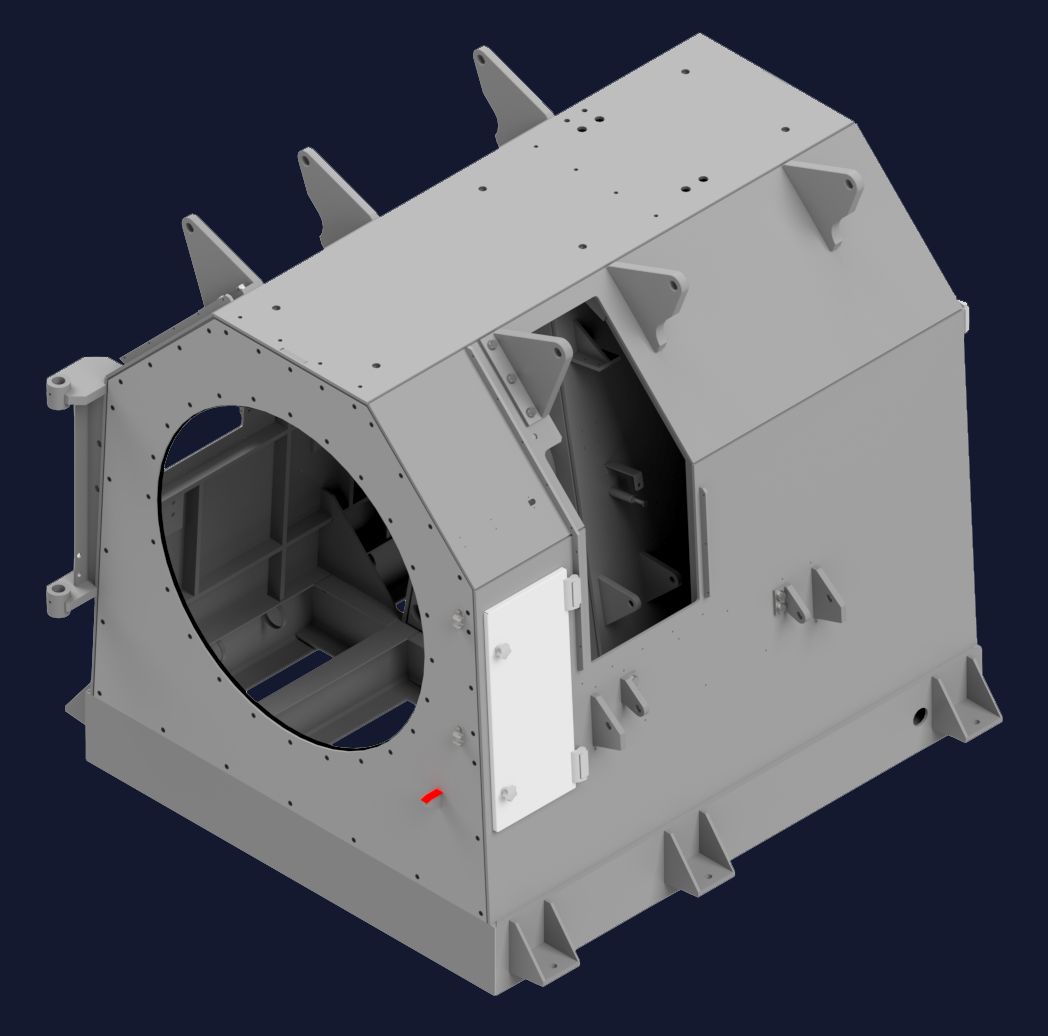
Heavy, oversized load-bearing structure of the Nawrocki GRB2 880.264 pellet mill — GRB2 880.264 pellet mill for feeds and biomass, from Nawrocki, made in Poland

Nawrocki does not cut corners on the structural strength of its pellet mills. The GRB2 880.264 press is built on an oversized foundation and additional reinforcements that allow for efficient, failure-free operation for at least 20 years — even under continuous, multi-shift production.

This massive, deliberately oversized structure is not needless ballast but a genuine source of savings. The rigid frame dampens vibration and eliminates micro-movement of the pelleting assembly, so the die, rollers and bearings wear more slowly and service intervals become rarer and cheaper.

In practice this translates into a lower total cost of ownership (TCO): the investment pays off through years of reliable production, minimal repair spending and stable, repeatable pellet quality throughout the entire life of the machine.

07

How does the Direct Drive system work in GR pellet mills?

Nawrocki's GR pellet mills are equipped with a Single or Double Direct Drive. Through the direct connection with drive belts, the pelleting unit receives enormous power that allows even very difficult raw materials to be pelletised at the expected capacity.

  • 6-pole, low-speed motors (rpm). Class IE4
  • The drive unit is based on a massive rotating shaft sleeve mounted in a welded housing. The sleeve allows a wide spacing of the load-bearing bearings, which reduces pressure and extends their service life.
  • A 20% larger, powerful main pulley receives the full power of the motors through a greater number of V-belts. The large rotating mass of the pulley eliminates fluctuations in motor load, which makes our pellet mills more resistant to sudden, momentary overloads of the pelleting unit. This means fewer losses caused by downtime related to unblocking the pelleting chamber. The pulleys are electronically balanced, which guarantees zero run-out and vibration.
  • No vibration and quiet operation,
  • V-belts are widely available and inexpensive. Replacing them takes a maximum of 120 minutes, once every few years.
  • Long service life is guaranteed by the ground surface of the grooves on the pulley and the Automatic Anti-Slip Belt System (ASBS), with physical and software monitoring of the conformity between motor and pulley rotation.
  • The robust construction, combined with the Single or Double Direct Drive and the high-mass pulley, allows the use of dies with a large working surface, which has a direct impact on the pellet mill's capacity and increases its production output by 1.5–2.0%.
  • The highest-quality bearings of the pelleting unit are selected to transfer the motors' power to the die as efficiently as possible.
  • Belt temperature and slip sensors as standard,
  • The reinforced overload clutch, designed to work with the anti-slip system, has a high activation threshold, which allows the pellet mill to be loaded even beyond the standard performance level.
  • Easy die replacement and centring thanks to the conical die mounting,
  • The most heavily loaded pellet-mill components have been designed in a reinforced and oversized version for safe and efficient operation.
08

What does GR pellet mill maintenance cost? Low service costs

Maintenance and servicing costs are just as important to pellet mill owners as production costs. The GR series pellet mills manufactured by NPT stand out for their exceptionally durable construction, which is resistant to difficult raw materials such as biomass, plastics and sludge.

Thanks to their solid build, these pellet mills ensure long-lasting, failure-free operation, which translates into lower running and maintenance costs, thereby increasing operational efficiency and user satisfaction.

  • A practically zero level of vibration extends the service life of expensive spare parts (bearings on the main shaft and in the rollers),
  • The use of top-quality components guarantees operation without unnecessary downtime — Endress+Hauser sensors, SKF-quality-class bearings,
  • Pelleting chamber components made of acid-resistant steel or galvanised,
  • Minimal cost of periodic inspections carried out by the supplier,
  • The uncomplicated construction of the pelleting unit allows most inspections to be carried out quickly by the in-house Maintenance Department,
  • Access to the component warehouse in Żnin, with shipping even on the same day,
  • Automatic alerting and restoration of the original operating parameters by the remote control-system service,
  • Free technical assistance and after-sales support,
  • An external warehouse of rollers and dies with constant 24/7 access.

Technical information about GR pellet mills

Pellet mill body

  • a rigid welded structure, mounted on a frame,
  • box-type construction with motors mounted on plates of adjustable height for correct belt tensioning,
  • rigidity guaranteed by a modern design developed on the basis of calculations and over forty years of experience,
  • a huge sleeve of the stationary shaft with widely spaced bearings increases their service life to up to 4 years,
  • a manual or electric hoist installed on the body for mounting the die and rollers,
  • at the rear, doors with safeguards preventing unauthorised personnel from accessing the drive unit, the electrical and signal cabinet and the pneumatic island,
  • a body ready to be integrated with a conditioner (or two),
  • 4 or 6 vibration isolators guarantee vibration reduction to a minimum.

Overload clutch

Protection of the pelleting unit

  • protects the die against damage to its inner surface or even rupture,
  • reacts instantly if a foreign body gets between a roller and the die, or in the event of an overload from a sudden amperage surge,
  • immediate release of the stationary shaft by shearing the fuse fixed to the clutch arm,
  • easy centring of the clutch with the body in order to fit a new fuse,
  • quick and easy access for inspections and adjustment work,
  • a channel for the sheared fuse allows it to be removed easily,
  • simultaneous electrical disconnection of the pellet mill by breaking the voltage link.

Mounting and adjustment of the die and rollers

Pelleting unit

  • standard manual roller adjustment in all pellet mill models except the GRA models,
  • quick and secure locking of the rollers in a set position by tightening the fixing and locking bolts,
  • a rigid front roller holder fixed with locking bolts,
  • a rear roller holder with 2 scrapers,
  • 2 or 3 scrapers mounted on the front roller holder; full adjustment possible,
  • a powerful reinforcing ring maintains the rigidity of the unit and prevents mechanical deformation,
  • a winch or crane integrated with the pelleting press body for easy, quick and safe replacement of the die and rollers.
Questions & Answers

Frequently Asked Questions

What is the maximum output of the GRB2 880.264?

The reference maximum output is 4.3 t/h for forest biomass at an inlet moisture content of 10–14%. For straw and sunflower husks the output drops to 3.2–3.6 t/h, and for RDF to 2.6–3.0 t/h — the difference is due to bulk density and feedstock properties.

What foundation dimensions are required?

The minimum foundation footprint is 3.0 × 2.5 m, reinforced concrete slab thickness ≥ 300 mm, and the allowable ground bearing pressure ≥ 1500 kg/m². Exact parameters must be confirmed by a local geotechnical report from the client's engineering team (final design and requirements depend on local requirements).

Does the GRB2 880.264 require a special electrical supply?

The machine requires a 3-phase 400 V / 50 Hz supply, with protection sized to the 264 kW connected load. The AIAC automation system applies a simultaneity factor of 0.7 when selecting cable cross-sections and supply-side protective devices.
Ready for the Next Step?

Need Technical Documentation for Your Project?